

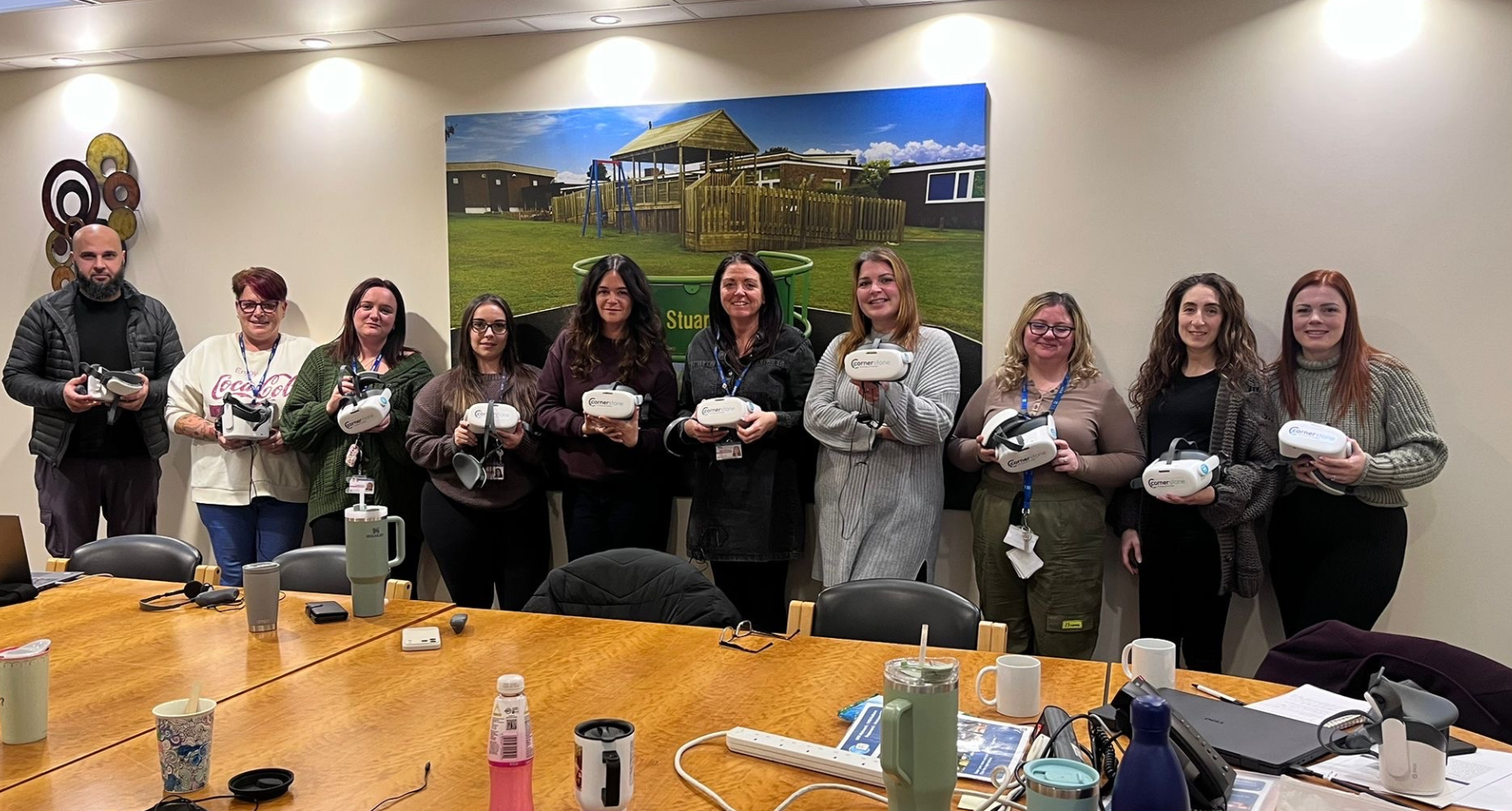
VR definitely changes the way lessons are set up and engages students in a whole new way. It lets young people with special educational needs access the same experiences as everyone else, gives them a different perspective, some chatty, some reflective, and allows them to explore situations at their own pace, seeing new things each time.
For one specialist further education college supporting learners aged 19–25, introducing virtual reality has been a transformative step. The Education Impact Academy Trust introduced virtual reality (VR) as a practical way to increase engagement, improve inclusion, and deliver essential life skills in a more meaningful way. Led by Pastoral Lead and Designated Safeguarding Lead (DSL) Zoe Dockery, the initiative focused on ensuring every learner, regardless of ability, could access learning experiences that felt relevant, safe, and engaging.
Why Introduce VR?
Staff recognised that traditional approaches to topics such as online safety and personal development were not always reaching all learners effectively. Some students needed more immersive, visual, or sensory experiences to fully understand and retain information.
The goals were clear:
Rather than treating VR as a novelty, the college approached it as a tool to support learning, communication, and independence.
How VR Was Introduced Safely and Inclusively
Implementation began with simple, carefully planned sessions focused on familiarisation. Students were given time to understand how to wear the headset, navigate content, and feel comfortable using the technology.
Content included scenarios on online safety, gaming behaviour, and everyday situations from the Joe at Home series. For learners with more complex needs, staff introduced sensory experiences, such as virtual encounters with animals, adapting access where necessary. In some cases, staff supported learners by holding the headset or allowing them to use it like binoculars.
Safety remained a priority throughout. Staff viewed all content in advance, particularly to ensure suitability for learners with conditions such as epilepsy. After each VR session, a 2D version of the content was shown to support understanding, discussion, and retention.
This structured approach helped build confidence for both staff and students.
The Impact: Engagement, Inclusion, and Insight
The impact was quickly visible.
Students began to look forward to scheduled VR sessions, often referring to them as “VR day.” Some groups became confident enough to set up the equipment independently, demonstrating growing familiarity and ownership of the learning process.
Perhaps most importantly, VR created new opportunities for inclusion. By adapting how the technology was used, staff ensured that learners with a wide range of needs could participate meaningfully. Students who might previously have struggled to engage in discussions were able to reflect on scenarios and share their thoughts.
Staff also gained valuable behavioural insight. VR scenarios helped learners explore risk and decision-making in a safe environment, leading to more thoughtful conversations around topics such as online safety.
The response from visiting parents and partner organisations was equally positive. Many valued seeing mainstream technology used effectively within a SEND environment, reinforcing the college’s commitment to inclusive, forward-thinking practice.
Challenges Along The Way
Like any new initiative, introducing VR came with practical challenges.
Setting up multiple headsets required additional time, and staff needed to establish reliable charging routines to ensure equipment was always ready for sessions.
There was also growing demand for a wider range of content, particularly in areas such as:
These challenges provided useful learning opportunities and helped shape future planning.
Looking Ahead: Building VR into the Curriculum
With confidence growing among staff and students, the college is now exploring how VR can become a sustainable part of everyday teaching and learning.
Future plans include:
These next steps reflect a shift from short-term innovation to long-term integration.
A Sustainable Tool for Inclusive Education
Virtual reality has opened new possibilities for teaching and learning within the college. Through combining immersive experiences with thoughtful implementation, staff have created an environment where learners with diverse needs can engage, reflect, and participate more fully.
As confidence continues to grow and new content becomes available, VR is set to remain a valuable and sustainable tool: supporting inclusion, independence, and meaningful learning for years to come.