
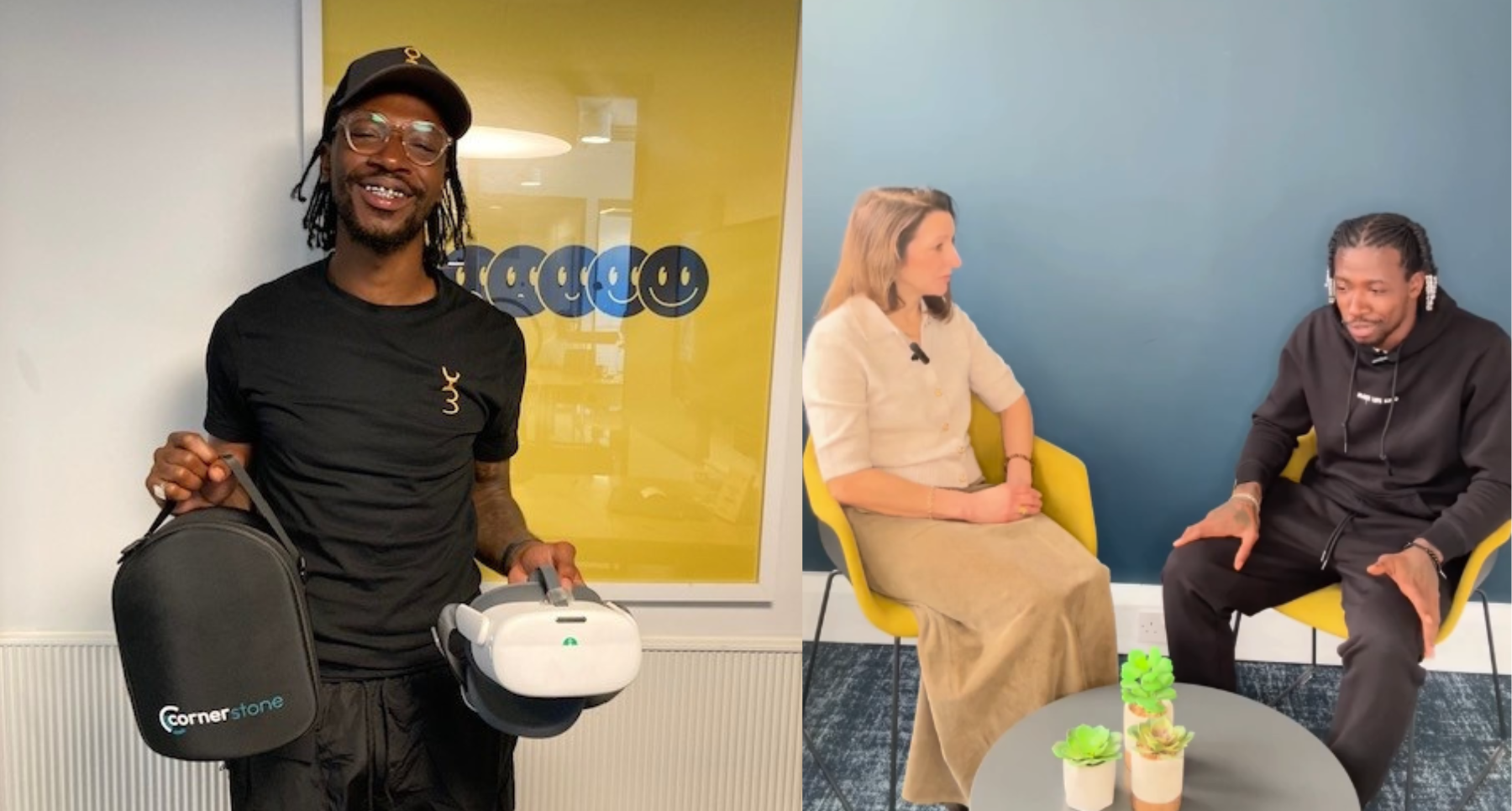
By Serena Hadi, Cornerstone VR
I recently had the privilege of speaking with Sosa Henkoma, who courageously shared his journey through child criminal exploitation, gang involvement, and the care system, and how he has turned that lived experience into a mission to support young people. His story is both heartbreaking and inspiring: a testament to resilience, courage, and the power of purpose.
Early Life: Loss and Displacement
Sosa was born in Nigeria, and his early childhood was marked by loss. His mother disappeared, and his father had moved to England, leaving Sosa in Nigeria. Later, his father arranged for Sosa to join him in the UK, where he lived with his father and stepmother.
“We were living in Kent. Trying to fit into the UK as a child, especially for my father, it was about becoming more British. But at home, I felt disconnected. My stepmother was physically and mentally abusive. By the age of eight, I was running away after she hit me over the head.”
During this time, Sosa had very limited connection with his family in Nigeria. His father restricted communication, leaving him feeling isolated and abandoned. The early sense of being “unseen” set the stage for vulnerabilities that would later be exploited.
Surviving the System: Isolation and Resilience
Sosa’s experiences in care and the justice system were compounded by systemic failures. Social workers and professionals often dismissed the exploitation he faced, treating it as typical adolescent behaviour rather than child criminal exploitation.
“When I turned to my social workers, they said a child my age couldn’t live that life and must be fantasising. I realised they weren’t going to help, so I turned to the people who had groomed me.”
This sense of abandonment and mistrust could have permanently derailed Sosa’s life. Yet he survived and slowly began to reclaim agency over his story.
Turning Points: Fatherhood and Mentorship
A pivotal moment in Sosa’s life came with parenthood. Before the birth of his first child, he had taken on a parenting role for his partner’s son from a previous relationship. Becoming a father himself at the age of 17 or 18 taught him about love, commitment and responsibility in a way he had never experienced before.
“Before that, I didn’t love myself or anyone else. But when I had my first child, I started feeling emotions beyond myself. I wanted to protect them, to give them a better life than I had. That motivated me to change.”
At 16, Sosa began actively working toward leaving the gang life behind, navigating complex challenges involving legal pressures, firearms, and threats to his family.
Advocacy and Impact
Sosa’s journey from trauma to advocacy has been extraordinary. Since gaining legal status in the UK, he has trained with the Human Trafficking Foundation and become a public speaker, trainer, and advisor on issues of child exploitation and criminality. His work includes:
- Speaking at the United Nations OSCE Conference in Vienna and events in Poland.
- Advising the OSCE on the definition of forced criminality.
- Co-founding the Live the Experience Advisory Panel to support young people.
- Delivering training to police and professionals on child exploitation.
He also runs Unique Talent CIC, a mentoring program providing skills, employment support, and life opportunities for young people, including residential trips to give them experiences many of them have never had.
“For the first time in my life, I was able to share the joy of childhood experiences with them, seeing young people be goofy, playful, and free was magical.”
Innovating Education with Cornerstone VR
Sosa also integrates Cornerstone VR into his mentoring programs to create immersive learning experiences. The VR scenarios allow young people to explore situations like grooming, exploitation, and criminal traps in a safe environment.
“VR allows them to step into these situations without real-world risk. They can discuss what they would do differently and gain awareness – without experiencing the trauma firsthand. It’s a revolutionary way to engage and educate.”
Reflections
Sosa’s story is a stark reminder of the systemic failures that can push children toward exploitation. But it is also a story of resilience, transformation, and hope. He has taken the pain of his past and turned it into a mission to protect and empower others.
“Kids are our future. If we don’t teach them emotional intelligence and awareness, we leave them unequipped to navigate the world.”
Sosa Henkoma is proof that even in the face of immense adversity, purpose and action can transform lives. His work continues to shape policy, educate professionals, and inspire young people to reclaim their futures.
Support the Next Escape Routes Retreat
If Sosa’s story has inspired you and you’d like to support the next generation of young people, please consider donating to the Escape Routes fundraiser. Every contribution, no matter the size, helps create opportunities for healing, growth, and lasting change.
Following the success of its first residential retreat, Escape Routes is now raising funds to deliver its next programme in August 2026. The retreats provide young people with a safe environment away from the pressures of everyday life, combining trauma-informed support, workshops on exploitation awareness and emotional resilience, outdoor activities, and ongoing mentorship to help them build confidence and create positive futures.